January 24, 2026
Amanda Danielson – Owner & Advanced Sommelier |
Jennifer Blakeslee, Eric Patterson, and I, started a chilly few days in New York City with the warmth of knowing the tribute dinner for Harlan “Pete” Peterson we are all contributing to sold out in ten minutes.
And we naturally did what Michigan always ends up doing when we’re serious: we packed the proof and put it on the plane, because there’s no other way to give people access.
I showed up with wine suitcases full of bottles from Black Star Farms, Left Foot Charley, and Shady Lane Cellars, plus tea from Light of Day Organics, and Short’s Brewing Company beer. Jen and Eric traveled with boxes of Northern Michigan-grown and raised products—real ingredients, not props. Our new friends from Vecino in Detroit did the same with items from Detroit-area farms, and helped complete my beverage wish list with Casamara Club and Anthology coffee.
(Sadly, the package from Two James Spirits was pillaged somewhere in Tennessee. If you’re reading this in Tennessee, there’s a reward in it for you if you identify the culprit.)
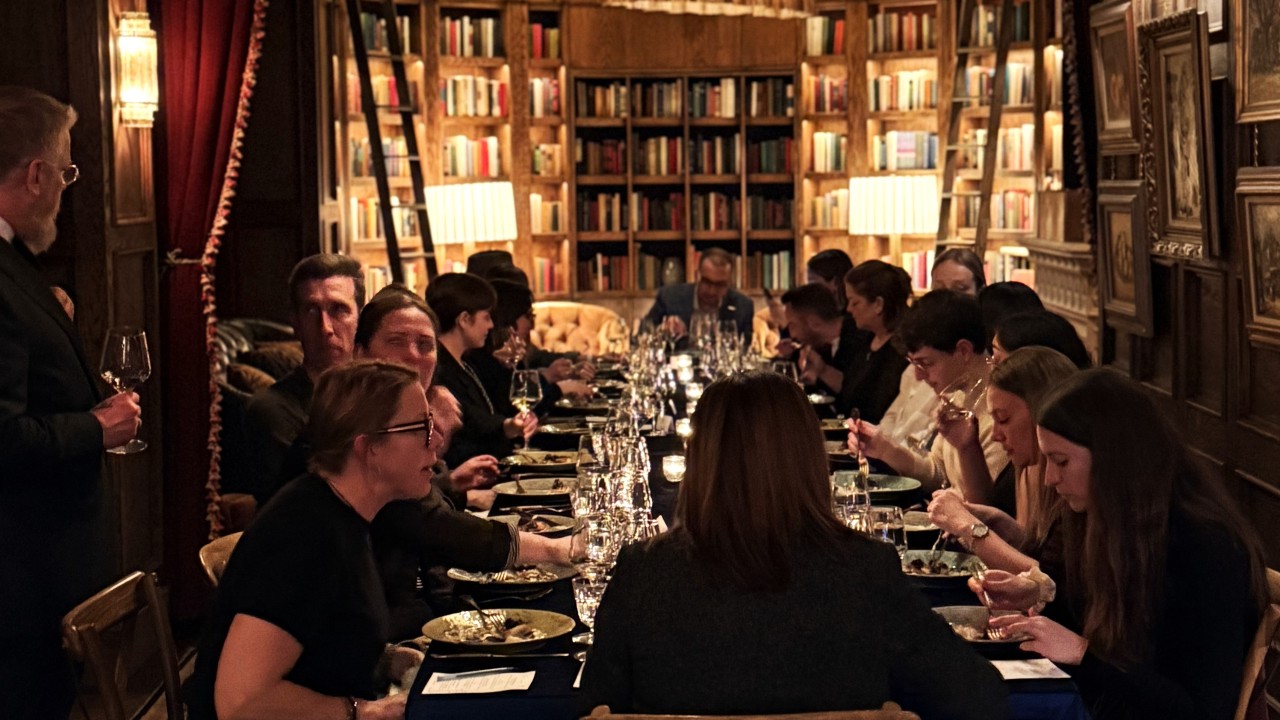
Then on January 20 at Maxwell Social in Tribeca, I served as sommelier for that Pure Michigan + Traverse City Tourism + Visit Detroit press dinner in NYC alongside The Cooks’ House (Traverse City) and Vecino (Detroit). It was a cross-regional table that did exactly what I think Michigan does best when we’re at our best: align agriculture with hospitality excellence and let our craft speak without shouting. It didn’t take long for the room to realize we’re not emerging. We’re just not yet known.
We returned to TC to meet the news of who made the James Beard Foundation list this year—and it landed in my brain right next to two conversations we had in New York.
First, as guests drifted back up to taste through the open bottles, a writer from Burlington, Vermont asked—earnestly—if Traverse City is really a “foodie town.” (A moniker most “food” people detest, by the way.) Eric didn’t hesitate: “No.” Then: “We’re well on our way.” And he pointed to the people doing the work—the professionals. The ones who’ve been here, the ones arriving now, some bringing their own food traditions and widening the table. The ones building standards, building teams, and relationships with farmers and makers—often without fanfare, and almost never with the support systems big cities take for granted.
If you want receipts that this region has been doing serious work for a long time, the James Beard record tells a very un-“foodie” story: Pete Peterson, Tapawingo earned recognition early (1997–2000, Best Chef: Midwest). Years later, Northern Michigan shows up again—Myles Anton, Trattoria Stella (2010/2011/2013/2014/2015, Best Chef: Great Lakes semifinalist), alongside others doing the work in that same era— Randy Chamberlain, Blu (2010, Best Chef: Great Lakes semifinalist), Guillaume HM, La Bécasse (2010, Best Chef: Great Lakes semifinalist), and Aerie at Grand Traverse Resort and Spa (2010, Outstanding Service semifinalist). More recently, Jen Blakeslee & Eric Patterson, The Cooks’ House are recognized (2025, Best Chef: Great Lakes finalist), and Emily Stewart & Andy Elliott, Modern Bird join the list (2026, Best Chef: Great Lakes semifinalist). And the Tapawingo ripple is very real—Stuart Brioza & Nicole Krasinski went on to major national chapters (2013, Best New Restaurant winner; 2015, Best Chef: West winner; plus later recognitions including book awards and Outstanding Restaurateur). That arc isn’t a vibe. It’s workmanship with consequences.
That’s the whole point, isn’t it? It is why March 12 matters.
I’ll be serving as sommelier alongside legendary maître d’ Mickey Bakst for the tribute dinner honoring Pete: mentor, craftsman, standard-setter, and one of the people who helped shape Northern Michigan’s modern culinary identity. Tapawingo wasn’t just a restaurant; it was early proof-of-work. The kind that turns young cooks into leaders. The kind that teaches you standards aren’t negotiable just because your delivery didn’t show up and winter is doing winter things.
And it’s also why the “frontier” framing matters.
Not frontier as in quaint. Frontier as in: you build excellence without the built-in ecosystem big cities take for granted. Here, you do it with short seasons and long winters. Smaller teams and bigger nights. Fewer vendors and fewer shortcuts. Less “someone has done this before,” more “we’ll figure it out—again.” You don’t have a PR machine—you have a shovel. And you do it in a town where you’ll see your guests at the post office tomorrow, so the work can’t hide behind spectacle. It has to hold up.
Oh, and that second NYC conversation happened in the post-dinner scramble: the culinary teams cleaning up alongside the killer venue staff, and Patterson on martini number two. I grabbed the only two unopened bottles left, hopped in an Uber, and met Pascaline Lepeltier at Chambers—set up through a colleague, with Pascaline fresh off France, likely exhausted, and still willing. I was grateful. I wanted her to taste Michigan wine, yes, but I also wanted to invite her to speak at Dirt to Glass™ in 2026 or 2027. I arrived fifteen minutes before she was due to leave and delivered the elevator pitch in actual elevator time. Pascaline gave me something better than a yes or no: validation that sommeliers are caretakers of the conversation about wine. Whether a region is overlooked (Michigan) or a category is dismissed (hybrid varieties outside Europe), every wine of quality deserves a voice. That is our mandate. (And for the record: Chambers just landed on the 2026 semifinalist list for Outstanding Wine and Other Beverages Program.)
People talk about a K-shaped economy: one line goes up, one goes down, and the gap widens. The divergence in the food and wine scene can look like that too.
On one side: the easy model. Vibes, volume, novelty. A good time that isn’t really about tasting or evaluation. (No hate. It can print money. That’s why it’s tempting.)
On the other side: the hard model. The one that insists craft is the point. That hospitality is a profession. That agriculture deserves respect. That wine isn’t a prop. That a kitchen isn’t a content studio. That mentorship matters. That standards matter even when it’s February and everyone’s tired and the roads are terrible.
Both models can exist under the same roof. But what we lead with shapes what the market believes about a restaurant, about a region, about an entire state.
This is the part I’m most excited about: Michigan doesn’t need a rebrand. It needs more points of connection, both inside the state and outside it, so the global market can understand what we’re building here: serious craft, rooted in agriculture, powered by hospitality, and strengthened by mentorship.
That’s the spirit behind Third Coast Wine Seen™ and the Monday Salons at Trattoria Stella: more shared vocabulary, more real contact between makers and the trade, more opportunities to learn together. Food and wine without the performance. No podium. No posturing. Just the work.
You can feel the next chapter arriving already: experienced chefs opening new places (hello, Umbo and Old Mission Tavern), the deputies—sous chefs and assistant beverage directors, our right-hands, stepping into their own voice and shaping hospitality experiences from the inside. That’s how a region grows up: when the bench gets deep and excellence becomes cultural, not charismatic.
So no, we’re not a “foodie town.” Thank God.
We’re something better: a place where a lot of people are doing the work, often without a big-city ecosystem, often without fanfare, and increasingly with the kind of standards that don’t need a nickname.
See you March 12, Pete. And thank you—for building the table the rest of us keep learning how to set.
(P.S. Tennessee: truly, we haven’t forgotten.)


